Employee benefit plans are an important part of many workplaces in Ontario. These plans help provide employees with additional financial and healthcare-related support beyond their regular salary. For employers, offering workplace benefits can also help attract and retain employees.
Although Ontario employers are not always legally required to provide extended employee benefits, certain legal obligations may apply once a benefit plan is offered.
At TM Law Professional Corporation, we assist clients with employment-related legal matters across Ontario.
What Is an Employee Benefit Plan in Ontario?
An employee benefit plan is a workplace program that provides additional coverage or financial support to employees.
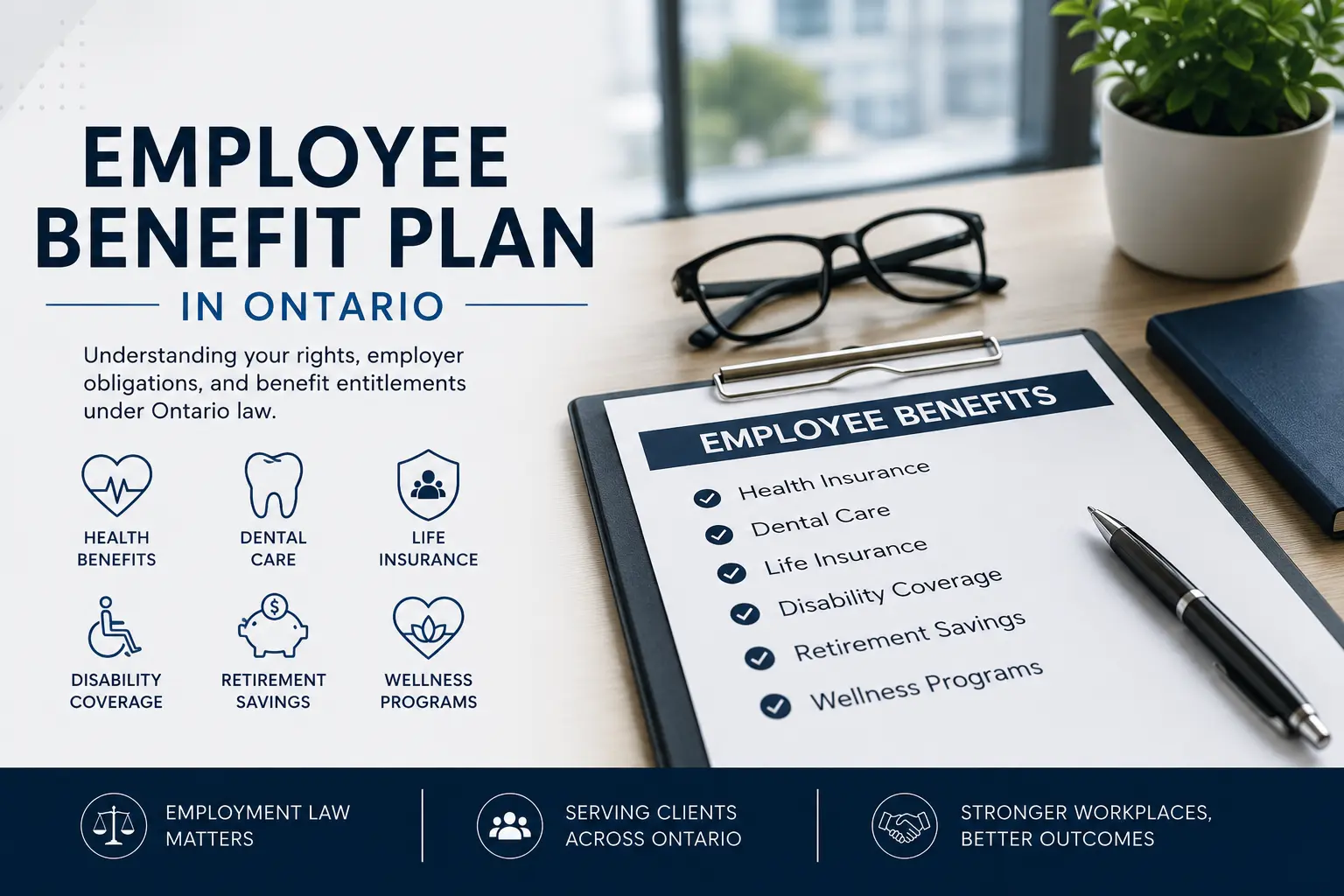
Common workplace benefits may include:
- Extended health coverage
- Dental insurance
- Life insurance
- Disability benefits
- Prescription drug coverage
- Retirement savings plans
Some employers offer group insurance plans, while others provide flexible benefit options based on employee needs.
Are Employee Benefits Mandatory in Ontario?
Ontario employers are not always required to provide extended employee benefits. However, once benefits are offered, employers must comply with certain Ontario employment law requirements.
Ontario’s Employment Standards Act (ESA) includes rules that may restrict discriminatory treatment relating to workplace benefit plans based on:
- Age
- Sex
- Marital status
According to Ontario employment standards guidelines, these rules may apply to various types of employee benefit plans.
Common Types of Employee Benefits in Ontario
Healthcare Benefits
Extended healthcare coverage may include:
- Prescription medications
- Vision care
- Physiotherapy
- Mental health services
Dental Benefits
Dental plans may help cover:
- Routine cleanings
- Fillings
- Dental examinations
- Emergency treatment
Life and Disability Insurance
Some employers provide life insurance and disability benefits to help employees and their families during unexpected situations.
Retirement Savings Plans
Certain workplaces also offer:
- RRSP contribution programs
- Pension plans
- Employer matching programs
Employee Rights During Leave in Ontario
In some situations, employees may continue participating in certain workplace benefit plans while on protected leave.
This may apply during:
- Pregnancy leave
- Parental leave
- Sick leave
- Family caregiver leave
- Bereavement leave
Benefits that may continue during leave can include healthcare coverage, dental plans, pension plans, and life insurance coverage.
Can Employers Change Employee Benefit Plans?
Employers may make changes to workplace benefit plans in certain situations. However, employment contracts, workplace policies, and legal obligations may affect whether those changes are permitted.
Disputes involving employee benefits can sometimes arise in matters involving:
- Benefit reductions
- Disability accommodations
- Termination-related benefits
- Workplace policy changes
Frequently Asked Questions
Are employers required to provide benefits in Ontario?
Not all Ontario employers are legally required to provide extended employee benefits. However, legal obligations may apply once benefits are offered.
Can employees keep benefits during leave?
In some situations, employees may continue participating in workplace benefit plans while on protected leave.
What are common employee benefits in Ontario?
Healthcare coverage, dental insurance, disability benefits, life insurance, and retirement savings plans are among the most common workplace benefits in Ontario.
Employment Law Guidance in Ontario
Understanding employee benefit plans and workplace obligations can sometimes be complex for both employers and employees.
TM Law Professional Corporation assists clients with employment-related legal matters and workplace disputes across Ontario.
Disclaimer: This article is provided for informational purposes only and does not constitute legal advice. Employment laws and workplace obligations may change over time.