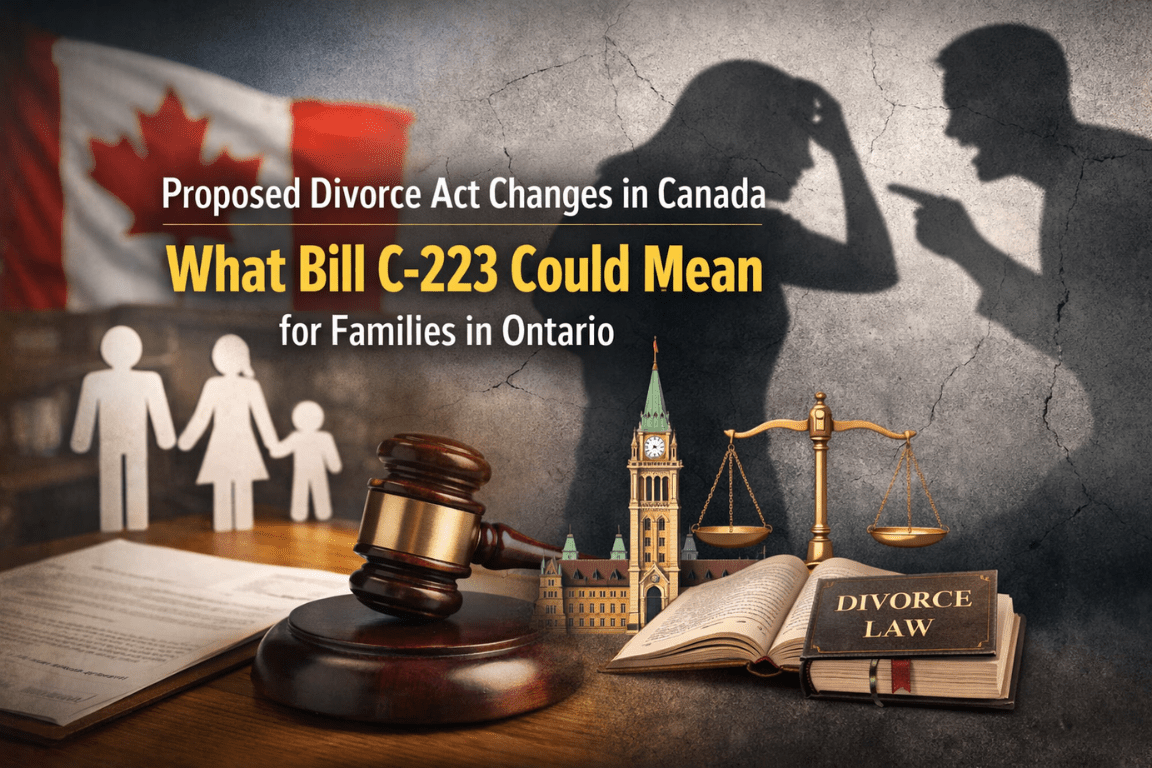
Divorce Act Changes in Ontario under Bill C-223 could significantly impact how child custody and domestic violence cases are handled. These proposed reforms may directly affect families navigating separation in Brampton and across Ontario..
What Is Bill C-223?
Bill C-223 proposes key amendments to the Divorce Act, including:
- Removing any implied presumption of automatic shared parenting
- Requiring lawyers to formally screen for signs of family violence
- Giving judges clearer tools to identify coercive control
- Strengthening the role of children’s voices in custody decisions
- The goal is to protect vulnerable parents and children.
- Each custody case must reflect the child’s best interests – not rigid formulas
Why Coercive Control Is Now Front and Centre
One of the most impactful elements of the proposed reform is the recognition of coercive control.
Coercive control refers to a pattern of psychological, emotional, financial, or social manipulation designed to dominate an intimate partner. Unlike physical abuse, it may not leave visible evidence. Yet it can deeply affect both parents and children.
Under the proposed changes:
- Lawyers would be required to screen clients for signs of family violence early in the process
- Courts would receive enhanced guidance in identifying subtle but harmful behavioural patterns
- The impact of such control on children would receive greater weight
For families in Ontario navigating divorce, early identification of these dynamics matters. It can influence negotiation strategy, mediation decisions, and court outcomes.
How Divorce Act Changes in Ontario Affect Custody Cases
Divorce Act Changes in Ontario under Bill C-223 may significantly influence how courts determine parenting time and decision-making responsibility. Judges will be required to give closer attention to domestic violence screening, patterns of coercive control, and the overall safety of the child before approving shared parenting arrangements.
These changes reinforce that custody decisions are not automatic or formula-based. Instead, courts must carefully assess whether equal parenting arrangements truly serve the best interests of the child. In cases involving conflict or allegations of abuse, judges may apply stricter scrutiny before granting shared custody.
For families in Brampton and across Ontario, this means that legal strategy must be aligned with evolving judicial expectations. Proper documentation, early screening, and experienced legal representation can play a crucial role in shaping custody outcomes.
Giving Children a Greater Voice in Custody Matters
Another important aspect of Bill C-223 is ensuring that children’s views are meaningfully considered.
Ontario courts already use tools such as “Voice of the Child” reports. In these reports, trained professionals summarize a child’s perspective on parenting arrangements.
However, courts must carefully assess:
- The maturity and age of the child
- Whether the child’s views are freely expressed
- Whether external influence or coaching may be present
The objective is not to transfer decision-making responsibility to children — but to ensure their lived experiences inform judicial decisions.
Will These Changes Improve the Family Court System?
If properly implemented, Bill C-223 could:
- Strengthen protections for victims of domestic violence
- Reduce unsafe shared parenting arrangements
- Provide judges with more comprehensive evidence
- Improve long-term outcomes for children
At the same time, the system must ensure fairness. Allegations of violence must be evaluated carefully, and legal tools must not be misused in high-conflict parenting disputes.
The effectiveness of these reforms will ultimately depend on thoughtful judicial application and experienced legal advocacy.
What This Means for Families in Brampton and Across Ontario
Family law in Ontario already operates under the “best interests of the child” principle. These proposed changes refine that framework — especially in cases involving domestic conflict or power imbalances.
For individuals considering divorce in Brampton, legislative changes like these underscore the importance of early legal advice.
The strategy you adopt — whether negotiation, mediation, or litigation — may be shaped by evolving standards around domestic violence screening and child participation.
How TM Law Professional Corporation Supports Clients in Complex Family Law Matters
At TM Law Professional Corporation, we understand that divorce is not just a legal proceeding — it is a pivotal life transition.
With over 16 years of experience handling family law matters in Brampton and throughout Ontario, our firm provides:
- Strategic divorce representation
- Child custody and parenting time advocacy
- Guidance in cases involving allegations of family violence
- Courtroom representation in high-conflict matters
We remain attentive to legislative developments to ensure our clients receive informed and forward-looking legal advice.
Frequently Asked Questions About Divorce Act Changes in Ontario
Q1: How will Divorce Act Changes in Ontario affect custody cases in Brampton?
Divorce Act Changes in Ontario may require Brampton courts to apply stricter screening for domestic violence and coercive control before approving shared parenting arrangements.
Q2: Does Bill C-223 automatically end shared parenting in Ontario?
No. The proposed legislation does not eliminate shared parenting. Courts must continue to assess each case based on the child’s best interests.
Q3: Can coercive control impact custody decisions in Ontario family courts?
Yes. Courts may give greater weight to patterns of coercive control, even if there is no physical abuse, when determining parenting arrangements.
Q4: Should I speak to a family lawyer in Brampton about these changes?
Yes. Early legal advice is important, especially if your case involves allegations of domestic violence or high-conflict parenting issues.
Speak With an Experienced Family Lawyer in Brampton
If you are navigating separation, custody disputes, or concerns involving domestic violence, informed legal guidance is essential.
Contact TM Law Professional Corporation to discuss your situation and understand your options under current and proposed family law standards.